

Finding time for fitness as a busy professional can feel like scheduling a meeting that never happens. Long hours, back-to-back calls, and mental exhaustion often push exercise to the bottom of the list. However, physical activity is not a luxury; it is a fundamental tool for maintaining energy, sharpening focus, and managing stress. The key is not to find more time, but to use the time you have more effectively. This guide provides a straightforward, adaptable framework designed for realistic integration into a demanding schedule. The goal is sustainability, not perfection, focusing on consistent movement that builds resilience for both body and mind.
Understanding the Foundations of Time-Efficient Fitness
Before outlining specific exercises, it is important to establish core principles. An effective routine for a packed schedule must be efficient, flexible, and focused on compound movements. Efficiency means choosing exercises that work multiple muscle groups simultaneously. Flexibility involves having a plan that can be shortened, lengthened, or adapted based on the day’s demands. The objective is to improve overall functional fitness—the strength and mobility needed for daily life—rather than targeting purely aesthetic goals. This approach yields the greatest return on investment for time and effort.
Essential Components of a Balanced Weekly Plan
A complete weekly plan incorporates three key elements: strength, cardiovascular health, and mobility. Balancing these areas prevents injury, improves overall health, and breaks the monotony. For busy individuals, these components do not need to be addressed in separate, hour-long sessions. They can be integrated or cycled throughout the week in shorter blocks.
A sample weekly structure could look like this:
- Monday: Full-body strength session (20-30 minutes)
- Tuesday: Brisk walking or cardio intervals (15-20 minutes)
- Wednesday: Active recovery and mobility focus (15 minutes)
- Thursday: Full-body strength session (20-30 minutes)
- Friday: Moderate cardio or a preferred active hobby (20-30 minutes)
- Saturday: Optional light activity or rest
- Sunday: Rest
This structure is a template, not a rigid rule. The total weekly commitment is approximately 2.5 to 3 hours, which can be broken into even smaller segments if necessary.
The Twenty-Minute, No-Equipment Strength Session
Strength training is crucial for maintaining metabolism, bone density, and posture, especially for those who sit for long periods. This session requires no equipment and can be done at home, in a hotel room, or even a quiet office space.
A balanced session includes:
- A dynamic warm-up (3 minutes): Arm circles, leg swings, torso twists, and gentle knee lifts.
- The main circuit (15 minutes): Perform each exercise for 45 seconds, followed by 15 seconds of rest. Complete the circuit 2-3 times.
- Bodyweight Squats: Stand with feet shoulder-width apart, lower hips back and down as if sitting in a chair, then return to stand.
- Push-Ups: Perform standard or knee push-ups, focusing on a straight line from head to heels.
- Glute Bridges: Lie on your back with knees bent, feet flat. Lift hips toward the ceiling, squeezing glutes at the top.
- Plank: Hold a straight-arm or forearm plank position, engaging core and keeping hips level.
- Reverse Lunges: Step one foot backward and lower hips until both knees are bent at 90-degree angles, then return to start.
- Cool-down (2 minutes): Hold static stretches for major muscle groups like quadriceps, hamstrings, and chest.
For progression, increase the number of circuits, reduce rest time, or add more challenging variations like pulse squats or longer plank holds.
Incorporating Effective Cardio Without the Gym
Cardiovascular exercise improves heart health and stamina. For time-pressed professionals, High-Intensity Interval Training (HIIT) is highly effective. A 15-minute HIIT session can be more beneficial than a longer, steady-state workout.
A simple protocol is the 30-20-10 method: After a warm-up, walk or jog at a moderate pace for 30 seconds, increase to a brisk pace for 20 seconds, then sprint or perform a high-intensity movement (like high knees) for 10 seconds. Repeat this cycle for 10-15 minutes, followed by a cool-down.
Low-intensity steady-state (LISS) cardio is another excellent option. This includes a brisk 20-minute walk during a lunch break, taking the stairs consistently throughout the day, or a short cycling session. The focus is on elevating the heart rate moderately and sustainably.
Mobility and Recovery: The Non-Negotiables
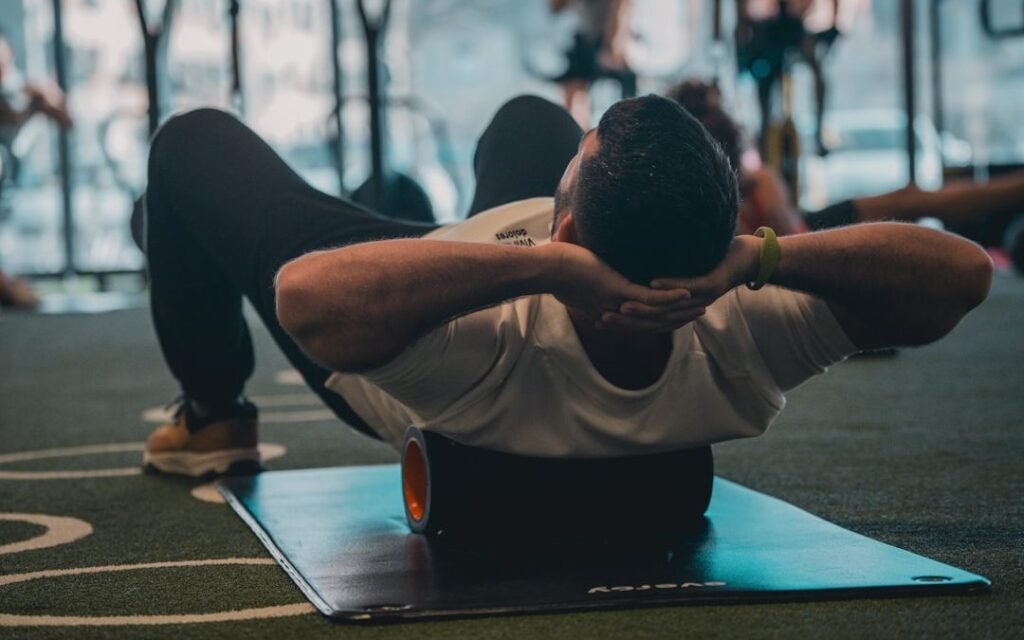
Skipping recovery undermines fitness progress. For professionals, targeted mobility work counters the negative effects of prolonged sitting, which often leads to tight hips, hamstrings, and a rounded upper back.
A short daily mobility routine can include:
- Cat-Cow Stretches for the spine
- Thoracic spine rotations on the floor or in a chair
- Deep squat holds (using support if needed) to improve ankle and hip mobility
- Standing chest stretches in a doorway
Additionally, prioritizing sleep and managing stress through techniques like focused breathing are integral parts of recovery. These practices ensure the body and nervous system can adapt and benefit from the physical training.
Practical Tips for Integration and Consistency
The main challenge is adherence, not knowledge. Implementing practical strategies can make the routine stick.
Schedule workouts like critical meetings in your calendar, treating them as non-negotiable appointments. Prepare workout clothes the night before to reduce morning friction. The concept of “exercise snacks”—short bursts of activity spread throughout the day—is powerful. This could be five minutes of bodyweight exercises between calls, a walk while taking a phone meeting, or calf raises while brushing your teeth. The cumulative effect is significant.
Furthermore, reframe the goal from “working out” to “moving more.” Using a standing desk, taking walking meetings, or parking farther away all contribute to daily activity levels. Consistency with small actions trumps sporadic, intense efforts.
Common Challenges and Realistic Solutions
Lack of time remains the most cited barrier. The solution is to deconstruct the ideal one-hour gym session into manageable components. Ten minutes in the morning, ten at lunch, and ten in the evening is still thirty minutes of exercise.
Mental fatigue can be a greater obstacle than physical tiredness. On such days, a gentler approach is recommended. A 10-minute mobility flow or a leisurely walk is vastly superior to doing nothing and maintains the habit.
For travel or disrupted routines, focus on the minimal viable action. Pack resistance bands, use hotel stairs, or follow a short bodyweight workout via a mobile app. The objective is to maintain momentum, not peak performance, during unusual periods.
Frequently Asked Questions
What if I can only commit to 10 minutes a day?
Ten minutes of deliberate exercise is far more valuable than zero minutes. Focus on high-quality movement within that time frame. A short circuit of squats, push-ups, and planks, or a brisk 10-minute walk, delivers tangible benefits for cardiovascular health, mood, and metabolic function. Consistency with 10-minute sessions daily builds a strong foundation and often leads to naturally wanting to do more over time.
Is it better to work out in the morning or evening for energy levels?
The optimal time is highly individual and depends on your circadian rhythm and schedule. Morning exercise can boost energy and focus for the day ahead and ensures the workout is completed before other obligations arise. Evening exercise can be an effective way to relieve work-related stress and may align with natural peaks in strength for some individuals. Experiment with both to see which leaves you feeling more energized and consistent. The best time is ultimately the time you can do regularly.
How do I stay motivated when I don’t see immediate physical results?
Shift the primary measure of success from external appearance to internal metrics. Track improvements in energy levels, sleep quality, stress management, and strength. Notice if you can do more repetitions, hold a plank longer, or walk up stairs without getting winded. These non-scale victories are more meaningful indicators of health and provide sustainable motivation. Celebrating these functional improvements helps maintain focus on the long-term benefits of fitness.
Can I get an effective workout without any equipment?
Absolutely. Bodyweight training is a highly effective method for building strength, endurance, and mobility, especially for beginners and intermediates. Exercises like squats, lunges, push-ups, planks, and glute bridges utilize your own body as resistance. To increase difficulty, you can manipulate tempo (slow down the lowering phase), add pauses, increase repetitions, or reduce rest time. As you progress, simple tools like resistance bands or a pull-up bar can add variety, but they are not required to start.
What should I do if I miss several days or even a week of my routine?
Missing workouts is a normal part of life, not a failure. The critical step is to restart without guilt or attempts to “make up” for lost time by overexerting. Simply return to your next scheduled session at your regular intensity. Fitness is built over months and years; a short break has minimal impact on long-term progress. The focus should be on resuming the habit, not punishing yourself for the lapse.
Building a Lasting Habit
Embarking on a fitness journey as a busy professional is an investment in your capacity to perform and thrive in all areas of life. The most successful routine is the one you can sustain amidst fluctuating schedules and priorities. By prioritizing consistency over duration, functionality over complexity, and recovery alongside activity, you build a resilient foundation. Start with the minimal viable action, celebrate small wins, and remember that every minute of movement contributes to a healthier, more energetic, and focused you. The path to sustainable fitness begins not with more time, but with a smarter application of the time you already have.
Author Bio:
Sohel is a certified fitness trainer and wellness coach with over a decade of experience specializing in designing realistic fitness programs for professionals. His approach focuses on integrating practical, science-based exercise and recovery strategies into demanding lifestyles to improve long-term health and performance.