

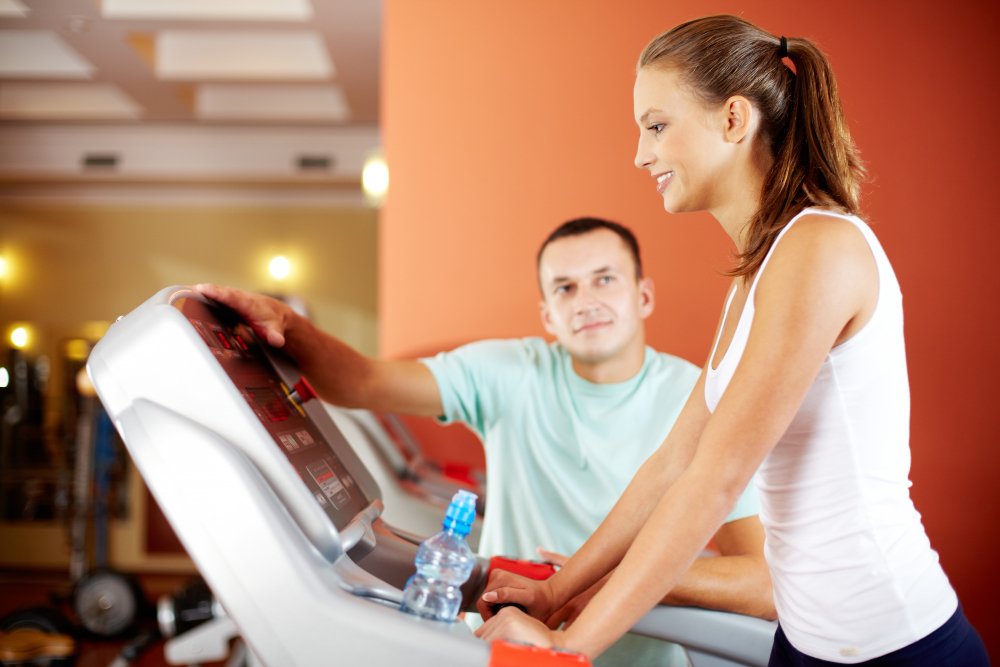
For anyone stepping onto the path of fitness with weight loss as a primary goal, running presents itself as a classic, effective choice. But a fundamental question soon arises: where is the best place to log those miles? The controlled environment of a treadmill or the ever-changing world of the great outdoors? The choice often feels personal, but when the focus is on shedding pounds efficiently and sustainably, understanding the nuanced differences between treadmill and outdoor running becomes crucial. This isn’t about declaring one the undisputed champion; it’s about dissecting the science, psychology, and physiology of each to help you design the most effective weight loss strategy for your life.
The Science of Calorie Burn: A Complex Equation
At the heart of the weight loss conversation is energy expenditure. The common assumption is that outdoor running, with its wind resistance and varied terrain, must torch more calories. Research, however, paints a more detailed picture.
A pivotal study published in the Journal of Sports Sciences compared the energy cost of running on a treadmill versus running overground. The researchers found that, at a self-selected pace, runners often expend a similar amount of energy. However, a key factor is calibration. Treadmills require proper calibration to match outdoor effort. When the treadmill is set to a 1% incline, it largely compensates for the lack of wind resistance, making the calorie burn roughly equivalent to running on a flat, smooth surface outdoors.
But “outdoors” is rarely a flat, smooth surface. This is where variables explode. Running on trails, gravel, or sand increases muscular engagement for stabilization. Running uphill, a feature you can simulate on a treadmill, significantly boosts calorie burn. A run that includes varied terrain and wind resistance will likely edge out a flat treadmill jog at a steady state. The American Council on Exercise notes that external factors like temperature also play a role; your body works harder to cool itself in heat or warm itself in cold, potentially increasing metabolic rate.
For pure, measurable control, the treadmill wins. You can set a precise speed and incline and maintain it, making calorie estimates from the console (while best taken with a grain of salt) a consistent benchmark. Outdoors, your pace naturally ebbs and flows with hills, corners, and obstacles, leading to a potentially higher average intensity if you push through those variations.
Psychological Warfare: Adherence is King
The most perfectly engineered calorie-burning workout is useless if you don’t do it consistently. This is where psychology dramatically tips the scales. Adherence is the single most important factor for long-term weight loss success.
The Treadmill’s Mental Game:
For many, the treadmill can become a bastion of monotony. The unchanging scenery and repetitive motion can lead to quicker perceived exertion, making 30 minutes feel much longer. This boredom is a major reason for dropout. However, this controlled environment is also its greatest psychological strength. It is immune to weather extremes—blazing heat, freezing cold, rain, or poor air quality are non-issues. For parents with young children or those with safety concerns about running in the dark, the treadmill offers unmatched accessibility and security. Modern treadmills combat boredom with integrated entertainment like scenic videos, virtual training programs, and connectivity to apps like Zwift, which can gamify the experience.
The Outdoor Experience:
Outdoor running is often cited as being superior for mental well-being. The phenomenon of “runner’s high” is more frequently associated with outdoor trails. This is likely linked to what psychologists call “green exercise.” A review in Environmental Science & Technology suggests that physical activity in natural environments is associated with greater feelings of revitalization, decreased tension, and increased energy compared to indoor activity. The changing scenery provides natural distraction, making it easier to enter a flow state where time passes quickly. The simple pleasure of fresh air and sunlight can make running feel less like a chore and more like an engaging part of your day, dramatically improving long-term adherence.
Biomechanics and Muscle Engagement: How Your Body Adapts
The way your body moves on a treadmill versus the road is subtly but importantly different.
On a treadmill, the belt assists with leg turnover to a small degree. It pulls your foot backward, which can lead to a slightly shorter stride and different footstrike pattern compared to overground running. The perfectly flat, cushioned surface reduces the load on bones and joints, which is a significant benefit for injury recovery or those with joint issues. However, this same lack of variability can under-develop the smaller stabilizing muscles in the ankles, knees, and hips.
Outdoor running demands more from your musculoskeletal system. You must propel yourself forward against the ground, which is immovable. You constantly make micro-adjustments for uneven pavement, cracks, or slopes, engaging a wider array of muscles. Running up hills builds formidable strength in the glutes and quadriceps, while downhill running (though tougher on the joints) challenges muscles eccentrically. This full-body engagement not only may contribute to a marginally higher calorie burn during the activity but also promotes greater bone density and resilient musculature that supports metabolism around the clock.
The Weight Loss Edge: Practical Strategies for Each Modality
To leverage each environment for maximum fat loss, specific strategies can be employed.
Maximizing Weight Loss on the Treadmill:
- Embrace Incline: Forget running flat. Walking or running at a steep incline is a phenomenal way to burn calories with lower joint impact. A 2014 study in the Journal of Sports Sciences found that incline walking can match or exceed the energy expenditure of running.
- Interval Training Made Easy: Precisely control your high-intensity intervals (HIIT). Try 1 minute at a challenging pace (e.g., 9 mph) followed by 2 minutes of active recovery (e.g., 4 mph). Repeat for 20-30 minutes. HIIT is renowned for its metabolic afterburn effect, or Excess Post-exercise Oxygen Consumption (EPOC).
- Use Programs: Utilize built-in hill or interval programs to automatically vary your workout, preventing adaptation and boredom.
Maximizing Weight Loss Outdoors:
- Seek Hills: Route planning is key. Design loops that incorporate hills to naturally create interval training. The effort of climbing spikes heart rate, while the downhill offers active recovery.
- Fartlek Play: Fartlek, Swedish for “speed play,” is perfect outdoors. Pick a landmark (a tree, a lamp post) and sprint to it, then jog until recovered. This unstructured interval training keeps the mind engaged and the body guessing.
- Engage with Terrain: Seek out trails. Running on soft, uneven surfaces increases energy expenditure and strengthens stabilizing muscles.
Treadmill vs. Outdoor Running for Weight Loss: A Side-by-Side Look
| Feature | Treadmill Running | Outdoor Running |
|---|---|---|
| Calorie Burn Control | High. Precise speed/incline settings allow for consistent, measurable output. | Variable. Highly dependent on terrain, wind, and pacing discipline. Can be higher on varied routes. |
| Psychological Factors | Can be monotonous, but consistent, convenient, and weather-proof. Entertainment integration helps. | Often more enjoyable and engaging due to changing scenery and nature. Better for mental well-being. |
| Safety & Accessibility | Excellent. Unaffected by weather, time of day, or safety concerns in isolated areas. | Dependent on conditions. Requires consideration of weather, traffic, visibility, and personal safety. |
| Biomechanical Impact | Lower impact due to deck cushioning. May reduce strain on joints. Less engagement of stabilizers. | Higher impact on hard surfaces. Engages more stabilizing muscles due to uneven terrain and self-propulsion. |
| Workout Variety | Requires proactive programming (intervals, inclines) to avoid monotony. Built-in programs can help. | Naturally varied by terrain. Easy to implement fartlek and hill workouts spontaneously. |
| Key Weight Loss Tip | Leverage incline (walking or running) and use precise interval timers for HIIT workouts. | Plan hilly routes and embrace trail running to naturally increase intensity and muscle engagement. |
Frequently Asked Questions (FAQ)
Q: Is running on a treadmill “easier” than running outside?
A: Physiologically, at the same pace and with a 1% incline, the effort is very similar. However, perceived exertion is often higher on a treadmill due to monotony and lack of visual flow. Outdoor running can feel easier psychologically due to distraction, even if you’re working just as hard.
Q: For a complete beginner focused on weight loss, which is better to start with?
A: The treadmill is often an excellent starting point. Its cushioning is gentler on joints, the controlled environment allows one to focus purely on form and endurance without external variables, and it makes it easy to track initial progress with precise numbers. Building a consistent habit is easier when weather and location are removed as barriers.
Q: Do I burn more fat in a specific “fat-burning zone” on either surface?
A: The concept of a exclusive “fat-burning zone” is misleading. While lower-intensity exercise uses a higher percentage of fat for fuel, higher-intensity exercise burns more total calories, including fat calories. The overall calorie deficit is what matters most for weight loss. Both treadmill and outdoor running can be adapted to fit any intensity zone.
Q: Can I train for an outdoor race exclusively on a treadmill?
A: You can build an excellent cardiovascular base on a treadmill. However, to race well outdoors, you must do some training outdoors. The biomechanical differences, the need to self-pace, and the experience of running on varied terrain are specific adaptations that treadmill running alone cannot fully replicate.
Q: How accurate are the calorie counters on treadmills?
A: They are estimates, often based on averages, and can be inaccurate by 10-20% as they rarely account for individual factors like body composition, running economy, or heart rate. Use them as a trending tool—comparing one workout to another on the same machine—rather than an absolute scientific measure.
Conclusion: The Winning Strategy is Synergy
In the final analysis, the treadmill vs. outdoor running debate for weight loss doesn’t demand a solitary winner. The most effective approach is not to choose one, but to understand and harness the unique strengths of both.
View the treadmill as your reliable, precision tool. It is the lab where you can conduct your high-intensity interval experiments, the sanctuary for steep incline walks on icy mornings, and the safe space for returning from injury. Its value lies in consistency, measurability, and sheer convenience. It ensures that your weight loss journey never hits a “zero-day” because of external circumstances.
View outdoor running as your teacher and your reward. It is the practice that builds athleticism, engages your mind with the world, and strengthens your body in a holistic way. It teaches you to adapt, to push against real-world elements, and to find joy in the movement itself—a critical component for lifelong fitness.
Therefore, the ultimate weight loss strategy is a synergistic blend. Use the treadmill for targeted, efficient workouts when time, weather, or safety are concerns. Use the outdoors for longer, exploratory runs that boost mental health and functional strength. This hybrid model prevents overuse injuries from repetitive strain, combats mental burnout, and keeps your metabolism guessing.
Your weight loss journey is a marathon, not a sprint. By refusing to limit yourself to one modality, you equip yourself with a versatile, resilient, and sustainable running practice. Lace up your shoes—whether they hit the belt or the pavement—and let each step, in its own way, bring you closer to your goals.