

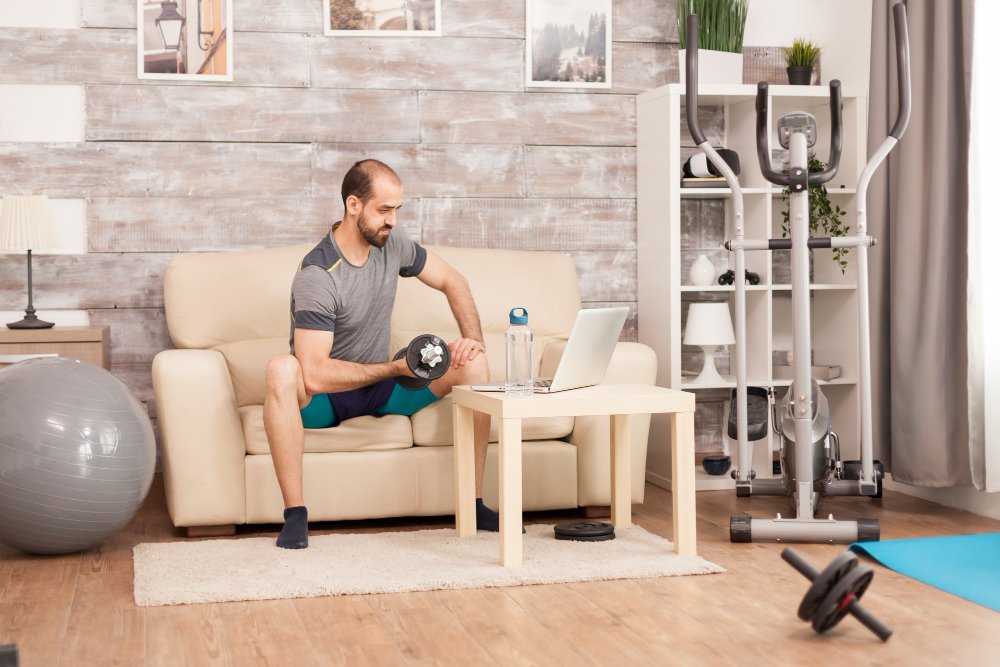
Living in a small apartment often feels like a constant puzzle. Where do you put the bike? How do you store the weights? The dream of a convenient, effective workout space can seem utterly incompatible with a studio or one-bedroom layout. However, the constraint of limited square footage can be the very catalyst for creating a supremely efficient and versatile fitness setup. By choosing smart, multi-functional equipment, a transformative home gym is not only possible but can be remarkably affordable.
The key lies in redefining what “equipment” means. It’s not about replicating a commercial gym. It’s about selecting tools that deliver maximum results with minimal footprint, focusing on resistance, versatility, and clever storage. This guide will navigate the best budget-friendly options that pack a serious punch without requiring a dedicated room or a trust fund.
The Foundational Philosophy: Why Multi-Functional Wins in Small Spaces
Before diving into specific products, it’s crucial to adopt the right mindset. In a small apartment, every piece must earn its keep. The goal is to achieve what fitness experts call “training economy”—getting the most physiological benefit from the least amount of gear and space. A study published in the Journal of Strength and Conditioning Research has repeatedly shown that consistency and progressive overload are far more critical to fitness outcomes than access to expensive machinery.
Therefore, the ideal small-space equipment prioritizes compound movements (exercises that work multiple muscle groups at once) and adaptability. It should allow for a full-body workout that can be scaled from beginner to advanced. This approach aligns perfectly with recommendations from authoritative bodies like the American Council on Exercise, which emphasizes functional, space-efficient training for general health and fitness.
The Indispensable Core: Non-Negotiable Staples
These items form the backbone of any effective apartment gym. They are incredibly versatile, notoriously durable, and can be tucked away in a closet or under a bed.
1. Resistance Bands: The King of Versatility
Often underestimated, a high-quality set of resistance bands is arguably the single best investment for the apartment dweller. They provide accommodating resistance (the tension increases as the band stretches), which is gentler on joints but challenging for muscles. With a single set of looped and tube bands with handles, you can simulate almost every cable machine exercise found in a gym—chest presses, rows, lat pulldowns, and leg extensions.
For example, anchoring a band to a sturdy door allows for rotational core work or face pulls, crucial for counteracting poor posture from desk work. Fitness experts at Men’s Health have touted bands for their portability and effectiveness for years. Look for sets that include multiple resistance levels and secure door anchors. They store in a small pouch, making them the ultimate space-saver.
2. Adjustable Dumbbells: The Ultimate Space Hack
A full rack of dumbbells is a spatial impossibility in an apartment. Adjustable dumbbells solve this elegantly. Brands like Bowflex or NordicTrack offer models where a dial or pin system changes the weight, effectively replacing 15+ pairs of dumbbells with a single footprint. While the initial investment is higher than a single pair of fixed dumbbells, the cost-per-pound and space savings are unparalleled.
They allow for precise progressive overload, which is the cornerstone of building strength and muscle. You can perform goblet squats, lunges, presses, and rows, seamlessly adjusting the weight for different exercises. For those on a tighter budget, spin-lock dumbbell handles with standard weight plates are a classic, if slightly less quick-to-change, alternative.
3. A High-Quality Yoga Mat: More Than Just for Yoga
This is your defined workout zone. A thick, non-slip mat protects both your joints and your flooring. It’s essential for floor exercises like Pilates, core work, stretching, and bodyweight circuits. A good mat, as reviewed by resources like Wirecutter, provides cushioning for comfort and traction for safety during planks or downward dogs. It mentally cues the start of a workout and can be rolled up and stored vertically in a corner or closet immediately after.
4. A Sturdy Jump Rope: For Unbeatable Cardio
When ceiling height permits, a jump rope delivers a staggering cardio workout in zero floor space. It improves coordination, bone density, and cardiovascular health far more efficiently than most bulky machines. Research highlighted by the American Heart Association consistently points to high-intensity interval training (HIIT) with tools like jump ropes for maximizing heart health in minimal time. A speed rope with adjustable length is a cheap, timeless piece of equipment that travels anywhere.
The Strategic Upgrades: Expanding Your Capabilities
Once the core is established, these additions can dramatically widen your exercise repertoire without cluttering your living area.
1. A Compact Suspension Trainer (e.g., TRX)
Suspension trainers use gravity and your body weight to create resistance. Anchored to a secure door, beam, or even a mounted pull-up bar, they allow for hundreds of exercises targeting strength, stability, and flexibility. The beauty lies in the angle; by simply adjusting your body position, you make each exercise easier or harder. They are lightweight, pack into a small bag, and, as noted in analyses from ACE Fitness, are excellent for developing core strength and functional fitness. A reliable off-brand version can often be found at a fraction of the cost with similar functionality.
2. A Foldable or Wall-Mounted Bench
An adjustable bench unlocks the full potential of your adjustable dumbbells. It allows for proper-form chest presses, step-ups, seated shoulder work, and supported rows. The key for apartments is the “foldable” feature. Many quality benches fold flat and can be slid under a bed or leaned against a wall. For the truly space-conscious, a sturdy, low-profile step platform can sometimes suffice for incline work and step-ups.
3. Kettlebells: The All-in-One Power Tool
A single kettlebell is a powerhouse. Its unique shape and off-center center of mass make it ideal for dynamic, full-body movements like swings, cleans, and Turkish get-ups. These exercises build explosive power, grip strength, and cardiovascular endurance simultaneously. Starting with one medium-weight kettlebell (e.g., 16kg for men, 12kg for women) provides a lifetime of workout variety. It stores neatly on the floor in a corner, always ready for a quick, intense session.
4. Sliders or Gliding Discs
These simple, often overlooked discs (or even substitute towels on hardwood) turn your floor into a instability challenge zone. They exponentially increase the difficulty of bodyweight exercises like lunges, hamstring curls, and mountain climbers by engaging stabilizing muscles. The National Academy of Sports Medicine frequently incorporates sliding movements for core and lower-body training due to their high muscle activation. They are cheap, flat, and store anywhere.
Budget-Friendly Small-Space Equipment Comparison
| Equipment | Primary Use | Approx. Cost (Budget-Friendly) | Space Footprint | Best For |
|---|---|---|---|---|
| Resistance Band Set | Full-body strength, mobility | $20 – $50 | Fits in a drawer | Versatility, travel, joint-friendly workouts |
| Adjustable Dumbbells | Progressive strength training | $100 – $300 (initial investment) | One square foot | Precise strength building, replacing a full rack |
| Jump Rope | High-intensity cardio | $10 – $25 | Vertical storage | Efficiency, coordination, heart health |
| Yoga Mat | Floor exercises, core, stretching | $20 – $60 | Rolls up tightly | Defining workout space, comfort, safety |
| Suspension Trainer | Bodyweight strength, core, stability | $50 – $100 (for quality off-brands) | Fits in a shoebox | Functional fitness, scalability, anchoring workouts |
| Single Kettlebell | Dynamic strength, power, cardio | $30 – $70 per bell | Stands in a corner | Full-body explosive movements, minimalist setups |
| Foldable Bench | Supported dumbbell exercises | $80 – $150 | Folds flat (~2-3” thick) | Chest/back development, versatility with weights |
| Sliders/Gliding Discs | Core activation, stability challenge | $10 – $20 | Fits on a bookshelf | Enhancing bodyweight exercises, engaging stabilizers |
Optimizing Your Layout and Workouts
Acquiring the gear is only half the battle. Intelligent storage and programming are what make it sustainable.
Storage Solutions:
- Vertical Space is King: Use wall hooks for jump ropes, resistance bands, and suspension trainers. A simple over-the-door organizer can hold bands, sliders, and grips.
- Furniture Dual-Purpose: Store items in decorative baskets or trunks that serve as coffee tables or ottomans. The space under the sofa is often a perfect hiding spot for a folded bench or mat.
- The “Closet Gym”: Dedicate one section of a closet, perhaps with shelf organizers, to house all equipment. This keeps the living area clear and makes setup a matter of opening a door.
Workout Design for Limited Space:
Focus on circuit training or HIIT routines. Perform a series of exercises back-to-back with minimal rest, using one or two pieces of equipment. For instance:
- Kettlebell Swings (60 sec)
- Resistance Band Rows (60 sec)
- Slider Mountain Climbers (60 sec)
- Jump Rope (60 sec)
- Rest (60 sec), repeat 3-5 times.
This approach minimizes the need to rearrange equipment constantly and delivers a time-efficient, comprehensive workout. For structured, science-backed programs that require minimal equipment, reputable free resources like Fitness Blender offer hundreds of filterable videos perfect for apartment dwellers.
Frequently Asked Questions (FAQ)
Q: Can I really get a good workout with just resistance bands?
A: Absolutely. Resistance bands provide constant tension throughout an exercise’s range of motion, which can lead to significant muscle growth and strength gains. By combining different bands and using proper anchoring, you can achieve a rigorous full-body workout. They are a staple in physical therapy and professional athlete training for both rehab and conditioning.
Q: My downstairs neighbors complain about noise. What are my options?
A: This is a common challenge. Prioritize low-impact equipment: resistance bands, suspension trainers, and sliders are virtually silent. Use a thick exercise mat to dampen sound for bodyweight work. Avoid heavy jumping or dropping weights. Opt for controlled kettlebell swings or goblet squats instead of jump rope if noise is an immediate issue. Communicating with neighbors about your workout schedule can also help.
Q: What is the single most cost-effective piece of equipment to start with?
A: A set of resistance bands. For around $30, you get an unparalleled range of exercise possibilities, portability, and scalability. It is the best tool for testing your commitment to home workouts before investing further.
Q: How do I ensure my workouts are safe without a spotter?
A: Focus on exercises where you can’t get trapped under weight. Use resistance bands and bodyweight. With dumbbells or kettlebells, choose weights where you can maintain perfect form for all reps, leaving 1-2 “reps in reserve.” Avoid maxing out on heavy bench presses without a spotter. Exercises like dumbbell presses, where you can safely drop the weights to your side, are smarter choices.
Q: I have literally zero floor space. Any ideas?
A: Embrace the wall and the door. A suspension trainer anchored to a door allows for rows, presses, and core work without using floor space. Isometric holds like wall sits and planks are highly effective. A pull-up bar that fits in a doorway (and is removable) provides a powerful upper-body workout standing up.
Building Your Sanctuary, One Piece at a Time
Creating an effective home gym in a small apartment is an exercise in intentionality. It strips fitness down to its essentials: movement, consistency, and smart effort. You don’t need a room full of mirrors and machines; you need a few carefully chosen tools that respect your spatial constraints while defying your physical limits.
Start with a foundation—a mat and bands. From there, build based on your preferred style of training. If you love strength, save for those adjustable dumbbells. If you crave intensity, the jump rope and kettlebell await. Each addition should solve a specific need and integrate seamlessly into your living environment.
Remember, the most significant factor for success is not the equipment itself but the decision to use it regularly. The convenience of having your gym steps away, available at any hour, eliminates the most common barrier to exercise: time. By investing in this compact, personal arsenal, you’re not just buying fitness gear; you’re investing in a healthier, more resilient version of yourself, right in the heart of your own home. The journey begins not with a massive renovation, but with unrolling a mat and taking the first step.